Beyond the Spreadsheet: Why Automation is Redefining the Role of the Modern Accountant
For decades, the stereotype of an accountant was someone buried in paper ledgers, calculators, and green visors. Today, that image is not just outdated—it’s a liability. The rise of artificial intelligence (AI), robotic process automation (RPA), cloud-based ERPs, and real-time reporting has transformed accounting from a historical record-keeping function into a forward-looking strategic partner. Yet many firms and departments still operate in “spreadsheet purgatory.” According to a 2024 survey by Accounting Today, 58% of finance leaders say their teams spend more than 60% of their time on manual data entry and reconciliation. That is a massive misallocation of talent.
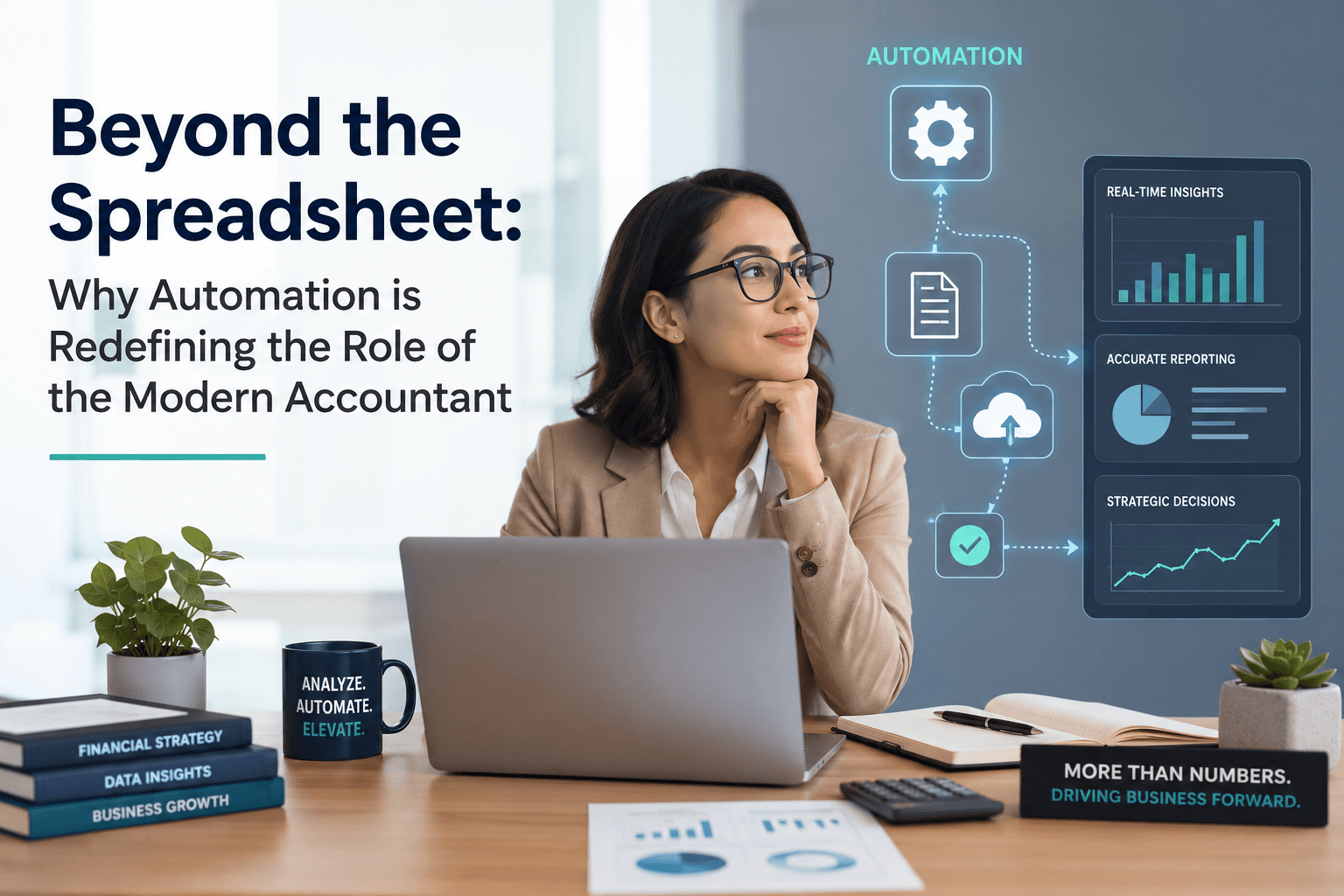
The Three Waves of Automation in Accounting
Wave 1: Transaction Automation (2010–2018) Optical character recognition (OCR) and bank feeds replaced manual data entry. Tools like Expensify, Receipt Bank, and basic ERP modules automated invoice capture and categorization. Result: 30-40% reduction in data entry time.
Wave 2: Workflow Automation (2018–2022) RPA bots started handling repetitive multi-step processes: matching purchase orders to invoices, sending payment reminders, and even initiating ACH transfers. Result: Month-end close cycles dropped from 2 weeks to 5-7 days for early adopters.
Wave 3: Intelligent Automation (2023–Present) AI and machine learning now predict payment defaults, classify complex GL codes based on historical patterns, and even draft variance explanations. Generative AI tools (like ChatGPT integrated into ERP systems) can generate draft footnotes for financial statements. Result: The close can happen in 1-3 days, with real-time dashboards.
What This Means for Your Department
1. Less Data Entry, More Analysis The old ratio was 80% clerical / 20% analytical. Automation flips it to 20% clerical / 80% analysis. But this shift terrifies many staff accountants who were hired for their speed at entering data. The fix: Retraining programs. Teach your team SQL, data visualization (Power BI/Tableau), and how to tell a story with numbers.
2. The Death of the “Month-End Panic” In a manual environment, the last week of the month is chaos. In an automated environment, you move to continuous accounting. Transactions are posted daily, reconciliations happen in near real-time, and accruals are triggered automatically based on purchase order data. Real-world example: A mid-sized manufacturing company reduced its close from 12 days to 48 hours by implementing automatic bank reconciliation and AI-powered intercompany matching.
3. The Rise of the “Critical Thinker” Technical skills (knowing debits and credits) are table stakes. The new premium is on:
- Curiosity: Asking why gross margin dropped in a specific product line.
- Business acumen: Understanding how a logistics disruption will impact working capital.
- Ethical judgment: AI can flag anomalies, but only a human can decide if it’s fraud or a legitimate business reason.
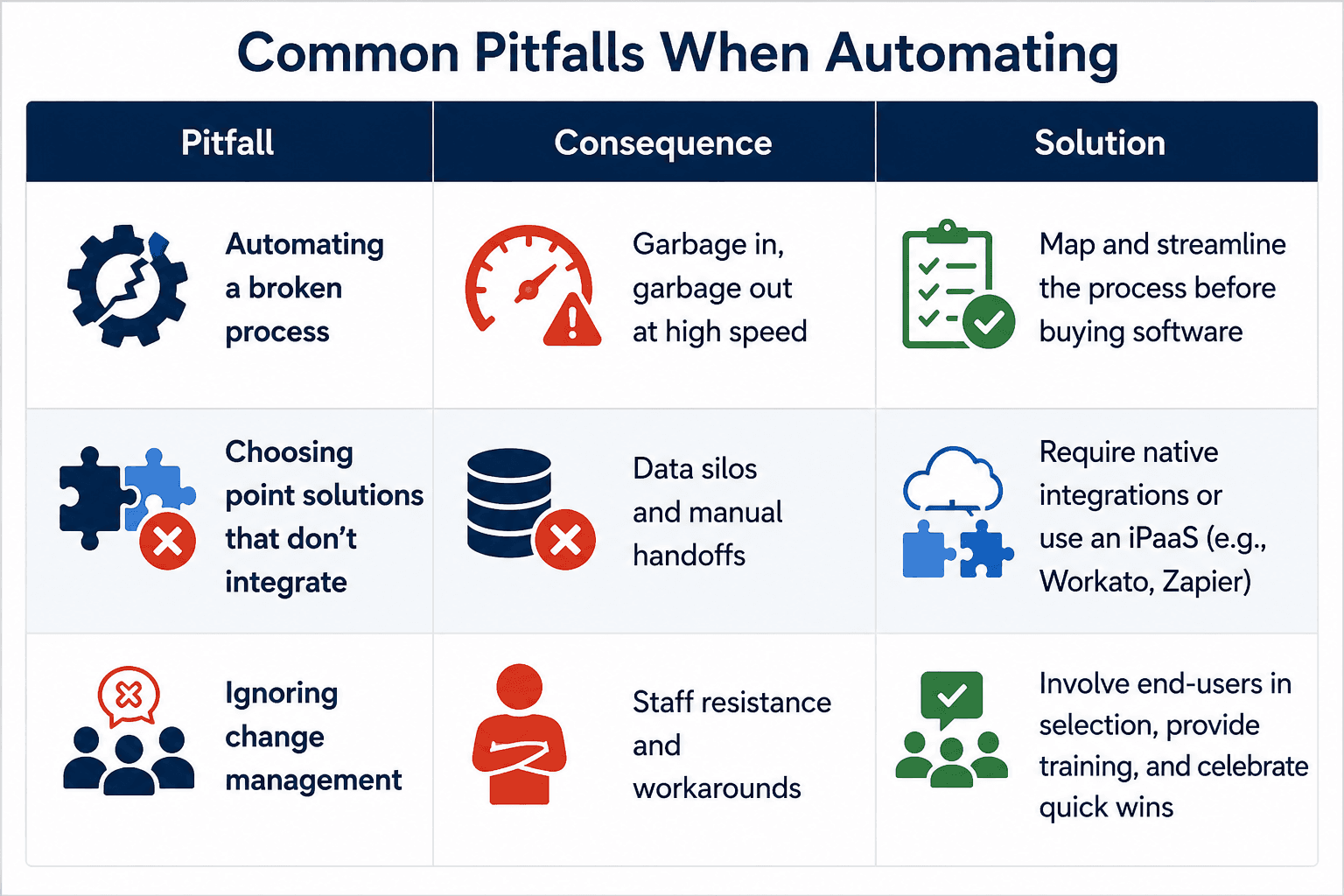
A Step-by-Step Automation Roadmap
Month 1-2: Audit your current state List every recurring task, how many hours it takes, and error rates. Prioritize high-volume, low-judgment tasks (e.g., bank reconciliation, AP three-way matching).
Month 3-4: Select tools For small businesses: QuickBooks Online + Bill.com + Fathom. For mid-market: NetSuite or Sage Intacct + BlackLine. For enterprises: SAP S/4HANA + UiPath.
Month 5-6: Pilot one process Automate vendor invoice posting for your top 10 suppliers. Measure time saved and error reduction.
Month 7-9: Scale and train Roll out to all processes. Create a “Center of Excellence” with power users who can troubleshoot.
Ongoing: Review and optimize Every quarter, assess if automation still aligns with business changes (new products, new banks, new tax rules).
“If your finance team still spends Monday morning downloading bank statements into Excel, you are falling behind. Automation is not about replacing people—it’s about freeing them to do work that actually matters: strategic planning, risk management, and advising business leaders. The firms that embrace this shift will win the next decade. Those that don’t will become compliance back-offices.”
Tags:
Found this helpful? Share it with your network.